
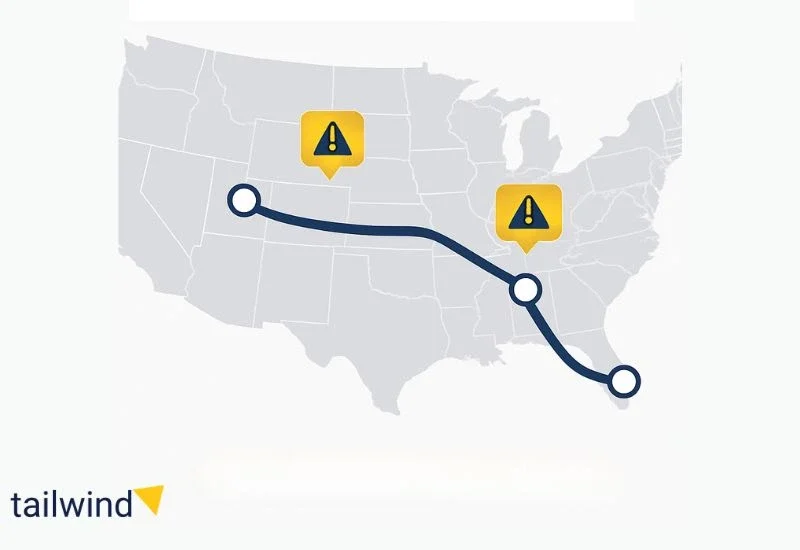
Hiring your first employee in a new state seems straightforward. You make an offer, they accept, they start work.
Then you discover you needed to register for unemployment insurance before their first day. The state’s minimum wage is higher than federal. They’re entitled to meal breaks your handbook doesn’t mention. Your workers’ comp policy doesn’t cover that state. And you’re now required to post seven different notices you don’t have.
Multi-state HR compliance creates layers of complexity that catch most companies unprepared. This guide explains what breaks first as you scale across state lines and how to build systems that prevent those failures.
TL;DR: Quick Summary
The problem: Each state has different minimum wages, overtime rules, meal break requirements, leave laws, and tax obligations. What’s compliant in one state violates law in another.
What breaks first: (1) Payroll taxes and registrations, (2) Wage and hour compliance, (3) Leave administration, (4) Workers’ comp coverage, (5) Required postings and notices.
Complexity threshold: At 2-3 states, manual tracking works. At 5+ states, you need systematic solutions. At 10+ states, specialized expertise becomes essential.
Best approach: Build scalable systems early, track which laws apply to which employees, automate what you can, get expert help for complex states.
Why Multi-State HR Compliance Is Hard
Federal employment law is consistent across all states. State employment law is not.
The fundamental challenge of multi-state HR compliance: You must comply with federal law AND each state’s laws simultaneously. When they conflict, you follow whichever provides greater employee protection.
Example: Federal law requires overtime after 40 hours per week. California requires overtime after 8 hours per day AND after 40 hours per week. An employee in California working 9 hours on Monday gets 1 hour of overtime, even if they work only 35 hours for the week.
This creates a compliance matrix where different rules apply to different employees based solely on work location.
The Five Areas That Break First
Understanding multi-state HR compliance means knowing what breaks first as you expand.
1. Payroll Taxes and Registrations
What breaks: You hire someone in a new state without registering for state payroll taxes, unemployment insurance, or withholding.
Why it breaks: Each state requires separate registrations before you can legally employ people there. Failure to register creates penalties and back taxes.
What you need in each state:
- State unemployment insurance (SUI) account
- State income tax withholding account (if state has income tax)
- State new hire reporting registration
- Local tax registrations (some cities require separate withholding)
Timeline: Most states require registration within 20-30 days of hiring first employee in that state, but some require it before the first day of work.
Common mistakes:
- Assuming you can use your home state’s accounts
- Missing local tax obligations (Philadelphia, New York City, etc.)
- Not registering because “it’s just one employee”
- Failing to report new hires within required timeframe (usually 20 days)
How to fix it:
Before making an offer in a new state, determine registration requirements. Complete registrations before employee’s start date. Track registration deadlines for each state. Use payroll providers that handle multi-state tax filing.
Review state unemployment insurance requirements before expanding to ensure you’re registered properly.
2. Wage and Hour Compliance
What breaks: You apply your standard wage and hour policies to employees in states with different requirements.
Why it breaks: Minimum wage, overtime rules, meal breaks, and pay frequency vary significantly by state.
Key differences across states:
Minimum Wage
Federal minimum is $7.25/hour. Many states have higher minimums ranging from $10 to $16+. Some cities have even higher minimums. Track minimum wage by state as rates change annually.
Overtime Rules
Most states follow federal rules (overtime after 40 hours/week). California, Colorado, and Alaska have daily overtime. California wage and hour laws require daily overtime calculations unlike federal law.
Meal and Rest Breaks
Federal law doesn’t mandate breaks. Many states do. California requires 30-minute meal break after 5 hours and 10-minute rest breaks every 4 hours.
Pay Frequency
Some states require weekly or semi-monthly pay. Others allow monthly pay. Massachusetts requires weekly pay for most workers.
Final Paycheck Timing
Some states require immediate payment at termination. Others allow standard payroll cycle. California requires payment immediately if employee is fired, within 72 hours if employee quits.
Common mistakes:
- Paying state minimum wage to employees in higher-wage states
- Not providing required meal or rest breaks
- Paying on schedule that violates state law
- Not calculating overtime correctly for states with daily overtime
- Missing final paycheck deadlines
How to fix it:
Create state-specific wage and hour matrix. Configure payroll systems for each state’s rules. Train managers on state-specific requirements. Review and update annually as minimum wages change.
3. Leave Administration
What breaks: You apply your standard PTO policy without accounting for state-mandated leave laws.
Why it breaks: Many states have sick leave laws, family leave laws, and other leave requirements beyond federal FMLA.
State leave law variations:
Paid Sick Leave
15+ states require paid sick leave. Accrual rates, uses, and carryover rules differ. California, Washington, Oregon, Massachusetts, Connecticut, New York, and others have specific requirements.
Family Leave
California, New York, Washington, Massachusetts, and others have family leave laws that provide paid leave beyond FMLA.
Pregnancy and Parental Leave
Some states require pregnancy disability leave separate from FMLA. Some require parental leave for non-birthing parents.
Voting Leave
30+ states require paid or unpaid time off for voting.
Jury Duty Leave
Most states prohibit termination for jury duty. Some require paid leave.
Military Leave
Many states have military leave laws beyond federal USERRA.
Common mistakes:
- Not providing state-mandated sick leave
- Requiring doctor’s notes when state law prohibits it
- Not allowing sick leave to be used for family member care (where required)
- Missing integration with FMLA and state family leave
- Not tracking accruals correctly by state
How to fix it:
Research leave requirements for each state where you have employees. Update policies to reflect most generous state requirements or create state-specific policies. Track accruals separately by state. Train managers on state-specific leave rules.
4. Workers’ Compensation Insurance
What breaks: You hire someone in a new state without updating workers’ comp coverage.
Why it breaks: Workers’ comp is state-specific. Your policy may not cover employees in states where you’re not registered.
State requirements:
- Nearly every state requires workers’ comp insurance
- Requirements vary by number of employees and industry
- Some states require coverage from first employee
- Coverage must be purchased from authorized carriers in each state
- Some states have state-run insurance funds
Common mistakes:
- Assuming existing policy covers new states
- Hiring in new state without coverage
- Not updating carrier when adding states
- Missing state-specific filing requirements
How to fix it:
Before hiring in new state, contact workers’ comp carrier to add coverage. Confirm coverage is effective before employee starts work. Maintain state-specific filings and notices. Review coverage annually as you expand.
5. Required Postings and Notices
What breaks: You display federal posters but not state-required postings.
Why it breaks: Each state requires different workplace postings. Failure to post creates penalties and makes it harder to defend against claims.
What must be posted:
- State wage and hour laws
- State unemployment insurance
- State workers’ comp information
- State discrimination laws
- State OSHA or safety requirements
- State-specific leave laws
- Minimum wage notices
Some states require 10+ separate postings. Some require postings in multiple languages based on workforce composition.
Common mistakes:
- Only posting federal notices
- Using outdated state posters
- Not updating when laws change
- Missing language requirements
- Not posting at all remote work locations
How to fix it:
Order state-specific poster sets for each state. Subscribe to poster update services. Check requirements when expanding to new states. Review annually for updates. Provide electronic postings to remote workers as required.
State-Specific Complexity Examples
Some states create disproportionate compliance complexity.
California
California has the most extensive employment law requirements:
- Higher minimum wage (often $16+ depending on location and industry)
- Daily overtime after 8 hours, weekly overtime after 40 hours, double-time after 12 hours per day
- Mandatory meal breaks (30 min after 5 hours) and rest breaks (10 min every 4 hours)
- Paid sick leave (minimum 40 hours/year)
- Family and medical leave beyond FMLA
- Strict final paycheck rules (immediate if terminated)
- Itemized wage statements with specific required information
- Mandatory heat illness prevention in outdoor work
- Strict meal and rest break premium calculations
- Private right of action for wage and hour violations
Challenge: California violations are expensive. Employees can sue for missed breaks, wage statement violations, and other technical violations with significant penalties per occurrence.
New York
New York combines state and local requirements:
- State minimum wage varies by location and employer size
- New York City has additional requirements
- Paid sick leave (state and NYC)
- Mandatory sexual harassment training
- Wage theft prevention notices to all employees
- Strict wage payment timing rules
- Complex tip credit rules
Challenge: Overlapping state and city requirements create compliance matrix. Manhattan employer faces different rules than upstate employer.
Massachusetts
Massachusetts has specific procedural requirements:
- Weekly or bi-weekly pay required for most workers
- Blue laws restricting Sunday and holiday work
- Treble damages for wage violations
- Strict independent contractor test
- Mandatory sick leave
- Complex overtime rules for certain industries
Challenge: Procedural compliance is strict. Missing a single paycheck on time can trigger penalties.
Washington
Washington combines high standards with aggressive enforcement:
- High minimum wage (often $16+)
- Paid sick leave statewide
- Paid family and medical leave
- Strict meal and rest break rules
- Aggressive enforcement of wage and hour violations
Challenge: Strong worker protections with significant penalties for violations.
Building Multi-State HR Compliance Systems
Phase 1: Document Current State
List every state where you have employees
Include remote workers, temporary assignments, and regular travel destinations.
Identify current compliance gaps
Research requirements for each state. Compare to current practices. List areas of non-compliance.
Prioritize based on risk
High-risk states (California, New York, Massachusetts) need immediate attention. States with few employees and less complex laws can follow.
Phase 2: Implement State-Specific Policies
Option 1: Unified Policy Approach
Create single policy meeting most generous state requirements. Apply to all employees nationwide.
Advantages: Simple to administer, consistent treatment, easier to communicate.
Disadvantages: May provide benefits beyond what’s required in many states, potentially higher cost.
Option 2: State-Specific Policies
Create different policies for different states based on specific requirements.
Advantages: Only provide what’s required in each state, potentially lower cost.
Disadvantages: Complex to administer, potential for errors, inconsistent treatment.
Recommendation: Unified approach works well up to 5-7 states. Beyond that, state-specific policies may be necessary for cost management.
Phase 3: Update Systems and Documentation
Payroll System
Configure for each state’s requirements:
- Tax withholding
- Wage and hour rules
- Leave accruals
- Pay frequency
- Final pay rules
HRIS
Tag employees by work location state. Configure automated workflows for state-specific requirements. Track state-specific leave accruals.
Employee Handbook
Create state-specific sections or appendices. Update annually as laws change.
Manager Training
Train on state-specific rules. Provide quick reference guides. Create escalation procedures for questions.
Phase 4: Establish Monitoring Process
Quarterly Reviews
Check for changes in minimum wage, new leave laws, updated posting requirements.
Annual Comprehensive Review
Full compliance audit for each state. Update policies, postings, training.
New State Expansion Checklist
Before hiring in new state, complete registrations, understand requirements, update systems, order postings.
Tools and Resources
Multi-State Payroll Providers
Systems designed for multi-state complexity:
- ADP Workforce Now
- Paychex Flex
- Gusto (good for smaller companies)
- Rippling
- Paylocity
Key features to look for:
- Automatic state tax registration
- State-specific wage and hour configurations
- Multi-state leave tracking
- Compliance alerts for law changes
Compliance Tracking Tools
- BLR (Business & Legal Resources): State law tracking and updates
- SHRM state law resources
- State labor department websites
- Employment law subscription services
Legal Resources
For complex multi-state operations, consider:
- Employment law firm with multi-state expertise
- HR consultant with multi-state experience
- PEO (Professional Employer Organization) for comprehensive management
When to Get Professional Help
Triggers for expert assistance:
Expanding to California, New York, or Massachusetts
These states have the most complex requirements. Expert guidance prevents expensive mistakes.
Managing 10+ states
Complexity becomes unmanageable without specialized expertise.
Facing employment claims
Multi-state employment litigation requires attorneys familiar with each state’s laws.
Rapid expansion
Growing quickly across multiple states needs proactive compliance structure.
Complex workforce
Remote workers, traveling employees, or multi-state assignments create additional complexity.
Remote Work Considerations
Remote work creates unique multi-state compliance challenges.
Where is the employee working?
Employment law applies based on where work is performed, not where company is headquartered.
Remote worker in California working for Texas company follows California law.
Temporary vs. Permanent
Short-term work in a state may not trigger full compliance obligations. Extended or permanent remote work does.
General rule: If employee works in state more than 30 days, treat as permanent presence requiring full compliance.
Tracking Remote Locations
Systems must track where remote employees work. If they relocate, compliance requirements change.
Multi-State Remote Workers
Employees who split time between states create additional complexity. Must track time in each state for tax and wage purposes.
The Bottom Line
Multi-state HR compliance creates exponential complexity. One state requires attention to detail. Five states require systematic processes. Ten states require specialized expertise.
What breaks first:
- Payroll tax registrations (because you can’t delay)
- Wage and hour compliance (because errors are expensive)
- Leave administration (because state laws vary widely)
- Workers’ comp (because coverage lapses create severe risk)
- Postings and notices (because they’re easy to miss)
The companies that manage multi-state complexity well build scalable systems early. They don’t wait until compliance breaks to fix it.
Key principles:
- Research requirements before expanding to new state
- Build systems that scale beyond your current state count
- Document which laws apply to which employees
- Review compliance quarterly as laws change
- Get expert help for complex states or rapid expansion
Multi-state compliance is manageable with proper systems. But it requires intentional effort and ongoing attention.
Need Help with Multi-State Compliance?
At Tailwind, we help companies build scalable multi-state HR compliance systems, particularly for companies expanding rapidly or operating in complex states.
We conduct multi-state compliance audits, implement state-specific policies and procedures, configure systems for multi-state requirements, and provide ongoing compliance monitoring as you grow.
Book a free multi-state compliance assessment to identify your current gaps and get a roadmap for building scalable compliance systems.
Because the time to fix multi-state compliance is before you face penalties in multiple states simultaneously.